What You’ll Learn from This Blog:
- Regulatory compliance is not optional, it’s the backbone of safe product launches.
- Claims, packaging, safety substantiation & registration standards are tightening across states.
- Early involvement of regulatory experts saves money, avoids lawsuits, and accelerates market entry.
Introduction:
As innovation accelerates and oversight tightens, beauty brands are finding themselves caught between creativity and compliance.
In a recent conversation with regulatory veteran Mo Lovelace, on the Product & Packaging Powerhouse podcast, hosted by me (Megan Young Gamble), we unpacked what’s really shifting under MOCRA, why brands underestimate risk, and what founders must build into their operations before launching (or scaling).
Here are the five biggest insights from that discussion, designed to help founders, operators, and product teams stay ahead.
1. USA Beauty Regulations ARE Real and Getting Tougher
One of the biggest myths Mo debunked is that USA cosmetic regulations are “light.” In reality, they’re strict, especially under MOCRA. Cosmetic facilities must now be registered with the FDA, brands must list ingredients, document safety and adverse events, and understand who their Responsible Person is, because that person is legally accountable. Compliance isn’t bureaucracy, it protects consumers, retailers and the brand.
2. Claims Are Market Weapons But Only If You Can Prove Them
Mo emphasized that every claim must be truthful and not misleading- the stronger your claim, the stronger substantiation required. “Instantly hydrates” or “24-hour moisture”? That requires actual testing not ingredient brochures or marketing hype. Consumer lawsuits (especially in California) are now triggered over claims as simple as “instant moisturization.” So if you can’t prove it → don’t say it.
3. Ingredients & Packaging Must Be Reviewed Before You Scale
From California allergen disclosure requirements to state-specific bans on PFAS, formaldehyde releasers, 1,4-dioxane limits, and more, there is no uniform rulebook across USA states. This affects formulation, label space, packaging decisions, recyclability rules, and retail acceptance especially as EPR (Extended Producer Responsibility) fees and reporting expand. If you launch without checking compliance, you risk includes (but not limited to): reformulation costs, delays, reprinted packaging & labels, penalties or blocked imports.
4. MOCRA Makes Every Brand Responsible – Indie or Enterprise
There is no regulatory grace period for startups versus big brands.
Every company must:
- maintain SOPs for adverse events,
- know the difference between adverse vs serious events,
- report serious cases within 15 calendar days,
- retain documentation for 3-6 years depending on company size.
Small brands often assume “we’ll fix compliance later,” but by then they’ve already taken on risk, generated claims, and printed packaging.
5. Early Regulatory Involvement Saves Money and Reputation
One of Mo’s strongest messages was that regulatory support isn’t expensive, reactive clean-up is. The founders who bring regulatory experts in early avoid reformulation costs, recalls, label waste, delayed launches, and damaged retail relationships. With consumer scrutiny increasing and regulatory guardrails tightening, safety assessments, claim reviews, and compliance audits are no longer optional line items, they are insurance policies for brand trust, market access, and growth.
Conclusion:
Regulation isn’t there to restrict innovation, it protects the industry so innovation can thrive. As Mo shared, the consumer is more informed than ever, and the brands that win are those who build safety, transparency, and compliance into their DNA, not as reaction, but as strategy.
Need help navigating regulation, packaging or compliance?
GLC partners with regulatory experts like Mo Lovelace to help brands redline risks, pass registrations, validate claims, and enter markets safely.
📌 For regulatory or packaging execution support, Schedule a Discovery Call with me (Megan) and I’ll make sure your launch looks great and passes the compliance test. PLUS, compliance is one of our company pillars to ensure brands are properly positioned for the market.
🎧 Listen to the full podcast episode HERE
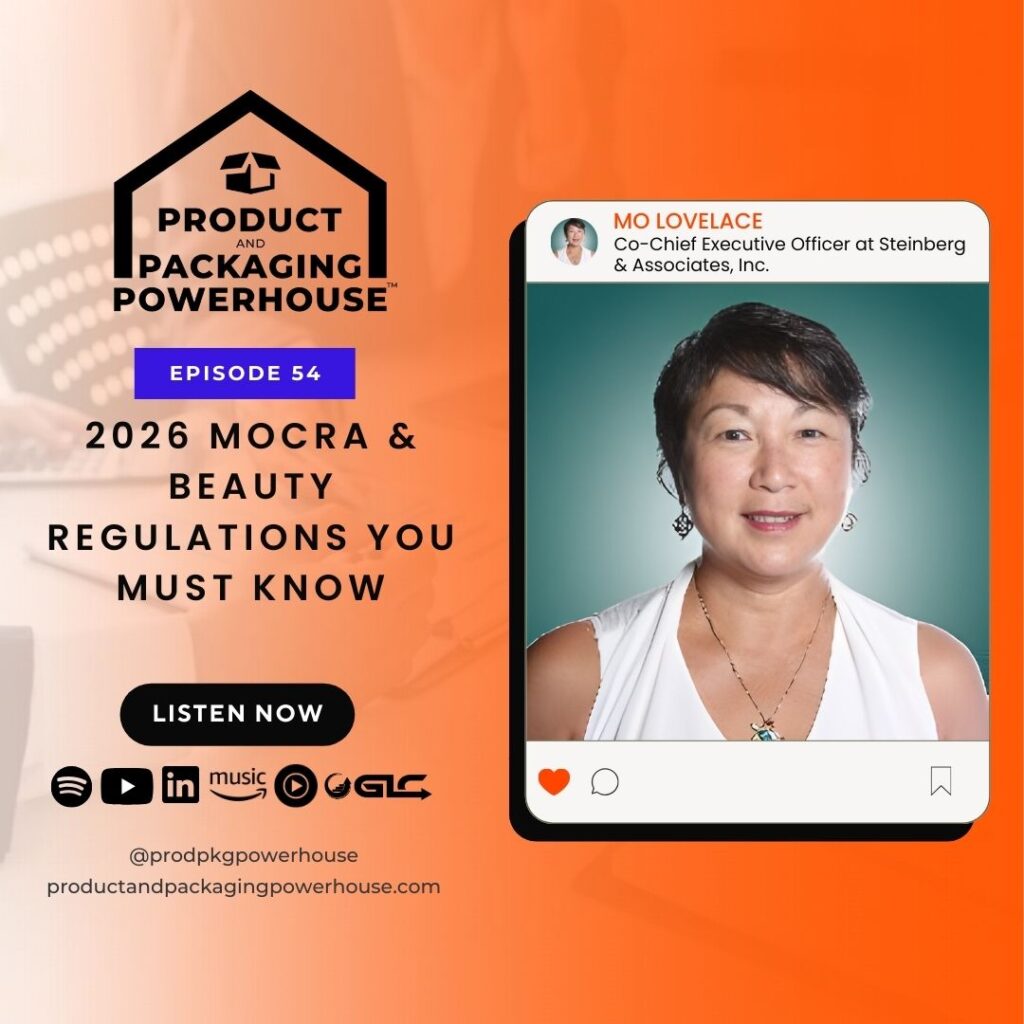
Mo’s Bio – Mo Lovelace is Co-Chief Executive Officer at Steinberg & Associates, Inc. and Cosmetic Regulatory Affairs Professional with over 30 years of extensive industry experience. Mo brings a wealth of knowledge and services to cosmetic companies of all sizes. She helps manage a dynamic team of consultants in various regulatory related services such as formula compliance review and claims compliance review, FDA Electronic registration support, Health Canada Cosmetic Notifications, WERCS registration and OTC related technical questions. She has served on the board of IBA for the past three years. Her two degrees, Bachelor of Technology (Manufacturing) and Bachelor of Science (Food), give her a solid knowledge base. Mo knows how to get the job done quickly and correctly, enabling her to service client needs efficiently and expertly.
- LinkedIn: https://www.linkedin.com/in/moyin-lovelace-2743a792/
- Company Website : https://www.steinbergandassociates.com
- Email Address: mo@steinbergandassociates.com
Start earning instantly—become our affiliate and earn on every sale!
ipezsplnvmexpdhfowwzsqnfioeptn
Monetize your audience—become an affiliate partner now!
u7ywrg
Earn passive income with every click—sign up today!
whkgat
Unlock exclusive affiliate perks—register now!
Share your unique link and cash in—join now!
Share your link and rake in rewards—join our affiliate team!
Refer friends and colleagues—get paid for every signup!