What You’ll Learn In This Blog
- How women transformed beauty from a side business into a global economic engine.
- The pivotal moments that forced the industry to become more inclusive, credible, and consumer-led.
- What today’s beauty founders and operators can learn from 100 years of disruption.
Introduction
Over the past 100 years, women have not just participated in the beauty industry — they have built, scaled, and reshaped it. Time and again, they were told there wasn’t space for them, their ideas, or their customers. Instead of waiting for permission, they created new systems, new standards, and new definitions of who beauty was for. From storefront salons to global shade expansions, their leadership transformed beauty from a side business into a cultural and economic force. Modern beauty exists because women refused to accept exclusion as the norm.
1) The foundation builders: turning beauty into an industry (not a hobby)
- Madam C. J. Walker: Walker didn’t only sell haircare, she built a system: product + education + nationwide network of women earning through beauty. Long before “community-led brands” were a thing, she proved that beauty could be economic power.
- Elizabeth Arden: Arden helped make modern beauty retail feel legitimate, elevating skincare and cosmetics into an experience, not a guilty pleasure. The salon, the service, the ceremony… that whole prestige playbook starts here.
- Helena Rubinstein: Rubinstein pushed the idea that skincare could be treated like knowledge, something you learn, personalize, and practice. Her legacy lives in every brand that sells “routine” as much as it sells a cream.
What they gave the industry: beauty anchored in trust, ritual, and education, not just trends.
2) The scale-makers: women who taught beauty to scale
By mid-century, the category was established. Now it needed repeatable growth.
- Estée Lauder helped define how prestige grows in America: the demo, the sample, the story, the relationship. It’s the reason so many prestige brands still behave like they’re selling belief as much as product.
- Then Hazel Bishop, a chemist, made performance the headline with long-wear lipstick claims. She helped shift beauty toward results and credibility, an early version of today’s “proof-based” consumer mindset.
- And Mary Kay Ash made the business model itself part of the product: recognition, leadership, and entrepreneurship for women. Whatever people debate about direct selling today, her influence on women’s economic participation in beauty is undeniable.
What they changed: Beauty learned that the product is only half the engine. The other half is distribution + repeatability.
3) The culture-changers: women who forced beauty to widen its lens
For decades, “universal” often meant “light-medium, and good luck.”
- In 1973, Eunice W. Johnson launched Fashion Fair Cosmetics to serve deeper skin tones with prestige products because Black women deserved luxury shades that actually matched. This wasn’t a trend. It was a correction the market had avoided.
- In the 1990s, Iman expanded that correction into a modern brand story: complexion for women of color built from real needs, not afterthoughts. She helped make “shade matching” a baseline expectation, not a special request.
- In a different lane, Bobbi Brown made everyday makeup feel like permission rather than performance. Starting in the early 1990s, she mainstreamed natural-looking artistry.. enhancing, not masking – an approach that still shapes how Americans buy “daily face.”
- And Lisa Price, who founded Carol’s Daughter in 1993, helped normalize textured haircare in mainstream beauty culture, years before big companies learned how to speak about curls and coils without sounding like tourists.
What they changed: beauty started to serve real lives, not just a narrow idea of who beauty was “for.”
4) The modern rewiring: women who changed how brands are built now
By the 2010s, beauty stopped living mainly in stores. It moved into feeds, comment sections, and tutorials.
- Michelle Phan helped open the floodgates for beauty education online – proof that tutorials weren’t entertainment; they were distribution, discovery, and trust.
- Emily Weiss took that further. She popularized a model that now feels obvious: listen first, build second. Community as R&D. With Into The Gloss (2010) and Glossier (2014), she popularize the idea that customers can co-author the brand, product development in public, shaped by real routines.
- Huda Kattan showed creators could build global brands with product-led fandom, if the formulas earned the hype.
- Pat McGrath turned artistry into innovation, showing that creativity isn’t “extra,” it’s strategy. She brought runway-level imagination into consumer reality without watering it down.
- And then came 2017. Fenty Beauty launched with 40 foundation shades and changed what the market considered “normal.” It didn’t invent inclusion, but it reset the baseline so completely that competitors had to answer, fast.
What changed: Brands no longer “announce” trust. They have to earn it in public, every day.
Conclusion
Looking back across a century of innovation, one pattern is clear: real progress in beauty happens when someone builds for those being overlooked. Each generation of trailblazers identified a gap — in access, representation, performance, or opportunity — and chose to close it. Their work expanded the market, strengthened communities, and raised expectations across the industry. As we build the next chapter of beauty, the most powerful question remains the same: who still needs to be centered? History shows that when women answer that question boldly, the entire industry moves forward.
If you’re building or evolving a beauty brand, now is the time to ensure your makeup strategy is engineered for real wear – from formulation to packaging. Let me help you prepare for the 2026 and beyond launches that align with today’s trends. Click here to schedule a conversation chat to discuss the possibilities.
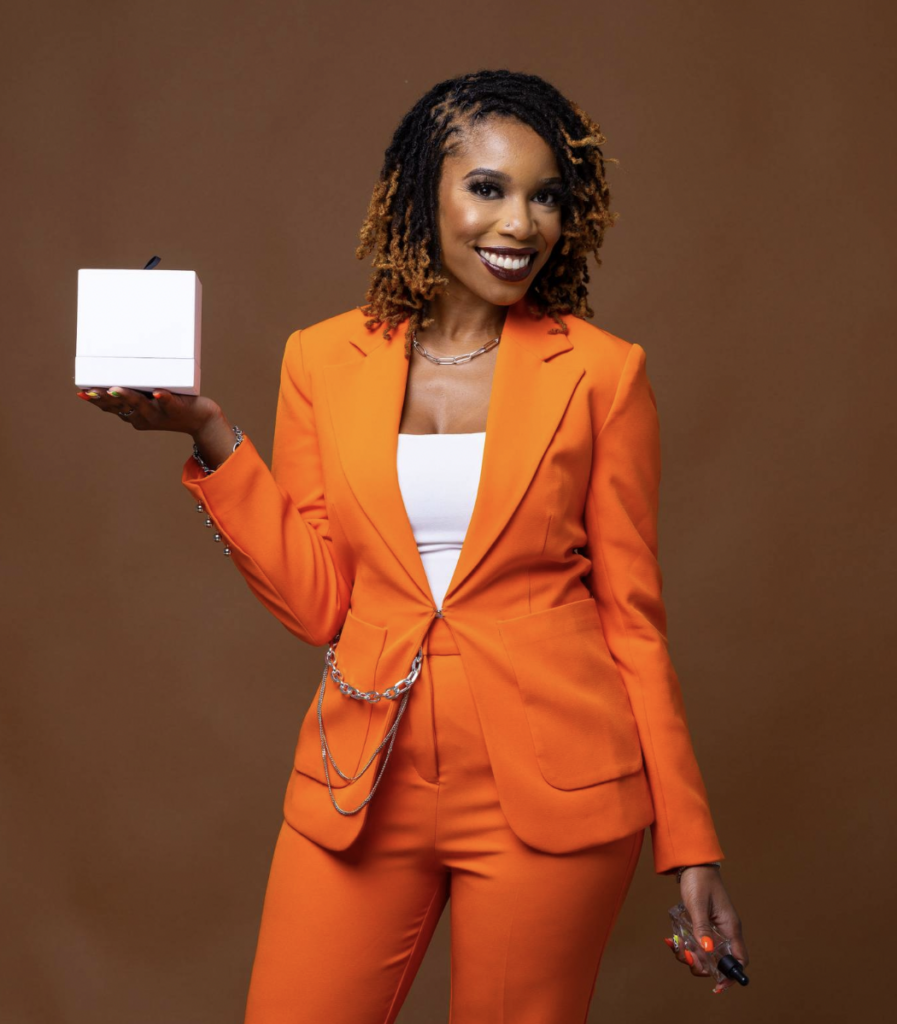
Megan Young Gamble, PMP® is a forward-thinking packaging and project management veteran with more than 10 years’ of experience transforming mere ideas into consumer product goods for today’s leading beauty, wellness, and personal care brands. Known amongst colleagues and clients for her perseverance and “see it through” mentality, Megan The Project ExecutionHER® is the owner and principal consultant of GLC, packaging & project execution team for CPG brands, Co-Owner of Pallet Pros, and Host of Product & Packaging Powerhouse Podcast.
- [AFFILIATE] Ready to crank out your content in as little as 5 minutes? Use Castmagic, AI powered tool to take your content creation from overwhelmed to overjoyed by saving hours of developing content. Save 20 hours by Signing up today! https://get.castmagic.io/Megan
- [FREEBIE] Learn about “day in the life” of a Packaging Project Manager → Get our “Starter Packaging PM Freebie” [link] https://glc.ck.page/thestarterpackagingprojectmanager
- [FREEBIE] Access commonly referenced organizations and tools in ONE PLACE with our handy guide HERE [link] https://bit.ly/OSTPlay
- Subscribe & Access our Video Vault YouTube Channel [ link] https://bit.ly/GLConYouTube
- Join our Email List [link] https://glc.ck.page/55128ae04b
- Follow and Connect with Megan on LinkedIn [link] https://linkedin.com/in/megangamble
- Learn about GLC, Packaging & Project execution firm for CPG brands http://www.getlevelconsulting.com
- Work with Me @ GLC, Schedule Discovery Call https://calendly.com/getlevelconsulting/15-minute-insight-session
- Got a topic you’d love us to cover? Share your ideas here [link] https://bit.ly/ppptopicform